How to Analyze TikTok Competitors in 2026

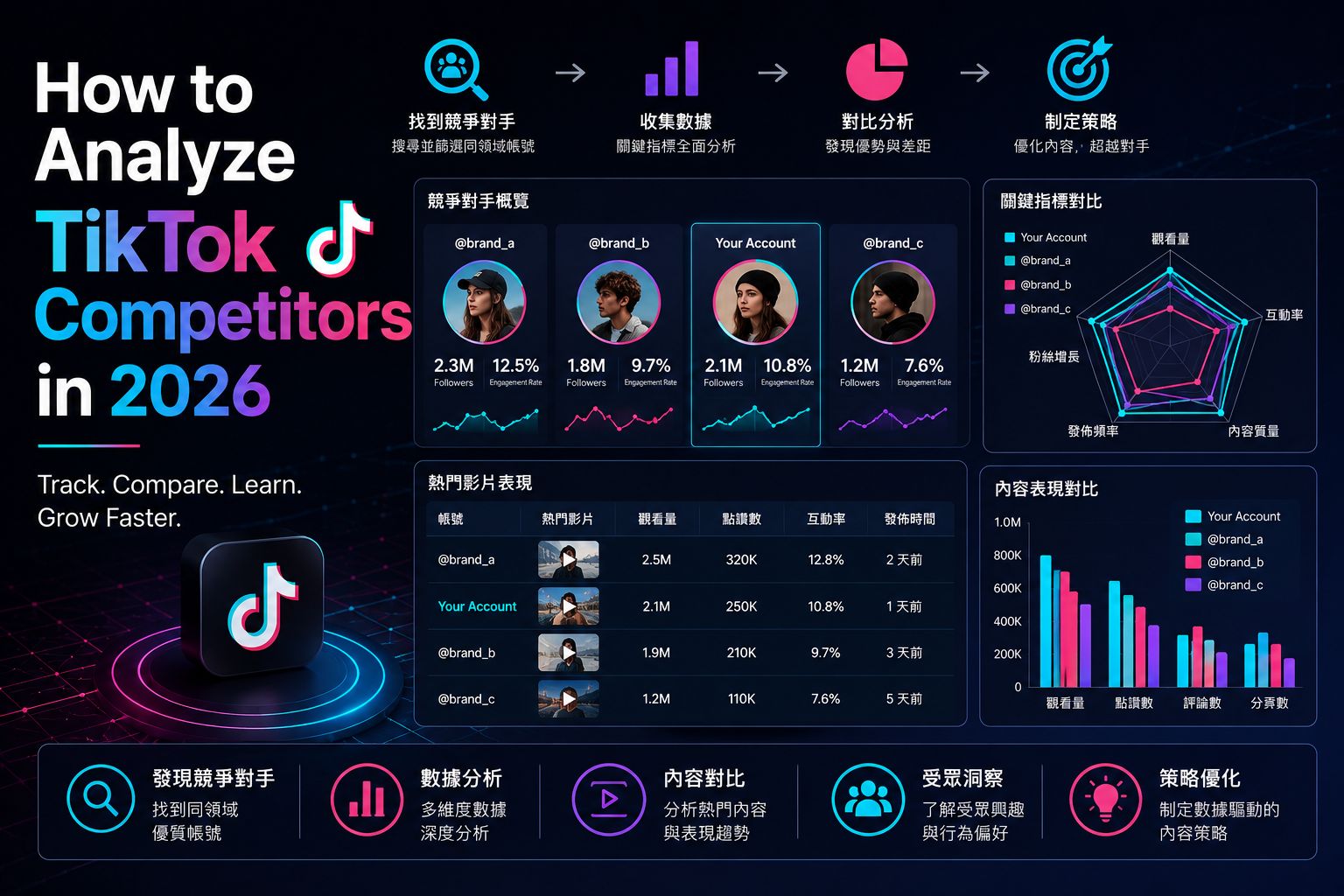
Why TikTok Competitor Analysis Matters in 2026
TikTok competition has changed. Sellers are no longer competing only on product price or store design. They are competing across products, creators, videos, live streams, category trends, affiliate networks, and content velocity.
That is why analyzing TikTok competitors in 2026 requires more than checking a few viral videos. A competitor may grow because of a strong product, but the real driver might be creator distribution. Another shop may seem to win through pricing, but the stronger signal could be its live selling rhythm, bundle strategy, or repeated video format.
For TikTok Shop sellers, brands, and agencies, competitor analysis is now a practical growth system. It helps you understand what is selling, why it is selling, who is promoting it, and whether the opportunity is still worth entering.
EchoTik’s guide on how to analyze TikTok competitors explains this clearly: competitor analysis is not about copying another seller. It is about reading market signals before they become obvious.
With the right workflow, you can use EchoTik to track competitor stores, discover trending products, analyze creator performance, compare video strategies, and build a smarter TikTok Shop growth plan.
Key Takeaways
TikTok competitor analysis should connect products, stores, creators, videos, live streams, and pricing signals.
A viral product is not always a good product opportunity. You need to check whether the trend is growing, stable, or already crowded.
Creator analysis is just as important as product analysis because many TikTok Shop sales are driven by affiliate and creator-led content.
Store-level tracking helps you understand whether a competitor is growing from one hero product or from a repeatable operating system.
EchoTik helps sellers and agencies turn TikTok Shop competitor data into product, content, creator, and campaign decisions.
The best competitor research workflow should be repeated weekly, not treated as a one-time task.
May 2026 TikTok Shop Competitor Data Snapshot
Before analyzing individual competitors, start with a current market snapshot. This helps you avoid making decisions based on outdated trends.
Use EchoTik to review this month’s product, shop, creator, and category signals.
May 2026 Signal | What to Check in EchoTik | What It Tells You | Recommended Action |
|---|---|---|---|
Trending products | Product ranking, recent growth, category movement | Whether demand is rising or cooling | Shortlist products with repeated growth signals |
Fast-growing stores | Store ranking, product mix, best sellers | Which competitors are gaining traction | Add these stores to your watchlist |
Active creators | Creator posts, product links, engagement quality | Who is shaping buyer attention | Identify creators worth testing |
Video patterns | Hooks, demos, comments, product mentions | Which content angles are working | Build creative templates for testing |
Live activity | Live frequency, promoted products, audience response | Whether the product needs explanation or urgency | Consider live selling or creator live campaigns |
Category shifts | Category-level product changes | Where new demand is appearing | Compare your niche against adjacent categories |
Promotion signals | Bundles, discounts, seasonal offers | How competitors frame value | Adjust offer positioning, not just price |
This monthly snapshot should be updated with current TikTok Shop analytics data. For example, if a category shows repeated product growth across multiple stores and creators this month, it is more useful than a product that only appeared in one viral video.
What to Track Before You Analyze a Competitor

A useful competitor analysis starts with the right tracking list. If you track too many stores, you create noise. If you track only the biggest stores, you may miss early opportunities.
Start by grouping competitors into five types.
Direct Competitors
These are shops selling similar products to a similar audience. They help you understand product positioning, price range, content style, and customer expectations.
Fast-Growing Competitors
These stores may not be category leaders yet, but they are gaining visibility. They often reveal fresh product opportunities and newer content strategies.
Creator-Led Competitors
Some stores grow because creators consistently promote their products. These competitors are useful for understanding affiliate strategy and creator selection.
Content-Strong Competitors
These competitors may not have the largest catalog, but they repeatedly produce videos that attract attention and buyer intent.
Category Leaders
These are useful benchmarks. They show what a mature store structure, product mix, and long-term category strategy can look like.
Step-by-Step Workflow: How to Analyze TikTok Competitors with EchoTik
Here is a practical workflow you can use inside EchoTik.
Step 1: Choose Your Target Category
Start with one category or niche. Do not begin too broad. A focused category gives cleaner signals.
For example, instead of analyzing all beauty products, narrow the research to skincare tools, hair care devices, body care bundles, or creator-led beauty products.
In EchoTik, review:
Category ranking
Product movement
Store activity
Creator promotion patterns
Video and live signals
The goal is to understand where demand is moving this month.
Step 2: Build a Competitor Watchlist
Create a list of stores that matter. Include direct competitors, fast-growing stores, creator-led sellers, and category leaders.
For each competitor, record:
Competitor Field | Why It Matters |
|---|---|
Store name | Helps you track performance over time |
Main category | Shows where the competitor is focused |
Best-selling products | Reveals current growth drivers |
Creator coverage | Shows whether growth is creator-led |
Video activity | Helps you understand content rhythm |
Live activity | Reveals live commerce dependence |
Promotion style | Shows how the store frames value |
This becomes your competitor monitoring base.
Step 3: Identify Their Winning Products
Do not only look at what competitors sell. Look at what is gaining momentum.
In EchoTik, check whether a product is:
Repeated across multiple competitor stores
Promoted by different creators
Supported by multiple videos
Appearing in live streams
Growing within a specific category
Connected to seasonal or trend-driven demand
A product with multiple supporting signals is usually stronger than a product driven by one temporary viral post.
Step 4: Study the Creator Network
Creator strategy is one of the most important parts of TikTok competitor analysis.
For each competitor, ask:
Which creators are promoting their products?
Are the creators niche-specific or broad lifestyle creators?
Do comments show buyer intent?
Are creators repeating the same product?
Does the store work with the same creators more than once?
Are creator videos educational, emotional, review-based, or demonstration-led?
This helps you understand not only who is promoting the product, but why the promotion is working.
Step 5: Break Down Competitor Videos
A strong TikTok video usually has a repeatable structure.
When reviewing competitor videos, analyze:
Video Element | What to Look For |
|---|---|
Opening hook | Pain point, curiosity, comparison, surprise, result |
Product demo | Whether the benefit is visually clear |
Trust signal | Creator review, customer proof, before-and-after, expert tone |
Objection handling | Price, usage, quality, delivery, comparison |
CTA | Shop now, watch live, claim offer, check product link |
Do not copy the video word for word. Extract the structure and build your own creative angle.
Step 6: Review Store-Level Strategy
A competitor’s store can reveal more than a single product page.
Check:
Whether the store relies on one hero product or a wider product mix
How frequently it introduces new products
Whether products are grouped into bundles or collections
Which products appear repeatedly in creator content
Whether the store uses live selling to support conversion
Whether product titles and images are optimized for TikTok buyers
This helps you understand whether the competitor is growing from a single trend or a repeatable operating system.
Step 7: Compare Pricing and Promotion Signals
Avoid looking at price alone. On TikTok Shop, value is shaped by content, creator trust, urgency, bundles, and social proof.
Analyze:
How competitors position the product
Whether they use bundles
How often promotions appear
Whether discounts are tied to live events
Whether creators mention limited-time offers
Whether comments show price sensitivity
The goal is not always to undercut competitors. Often, the better move is to improve perceived value.
Step 8: Turn Insights Into Tests
Competitor analysis only matters if it leads to action.
Use your findings to create:
Product test lists
Creator outreach lists
Video hook libraries
Live selling scripts
Offer and bundle ideas
Category expansion plans
Weekly competitor monitoring reports
This is where EchoTik becomes more than a research tool. It becomes part of your growth workflow.
Automating Influencer Marketing Performance Audits with KeyAPI
Product Analysis: Find What Competitors Are Really Selling
When analyzing competitor products, look beyond surface popularity.
A strong product opportunity usually has several signs:
The product is promoted by more than one creator
Multiple stores are testing similar items
Videos show clear product benefits
Comments include purchase questions
The product fits current category demand
There is room for better positioning or bundling
Use EchoTik to compare product movement across stores, creators, videos, and categories. This helps you avoid choosing products based only on hype.
Store Analysis: Understand How Competitors Scale
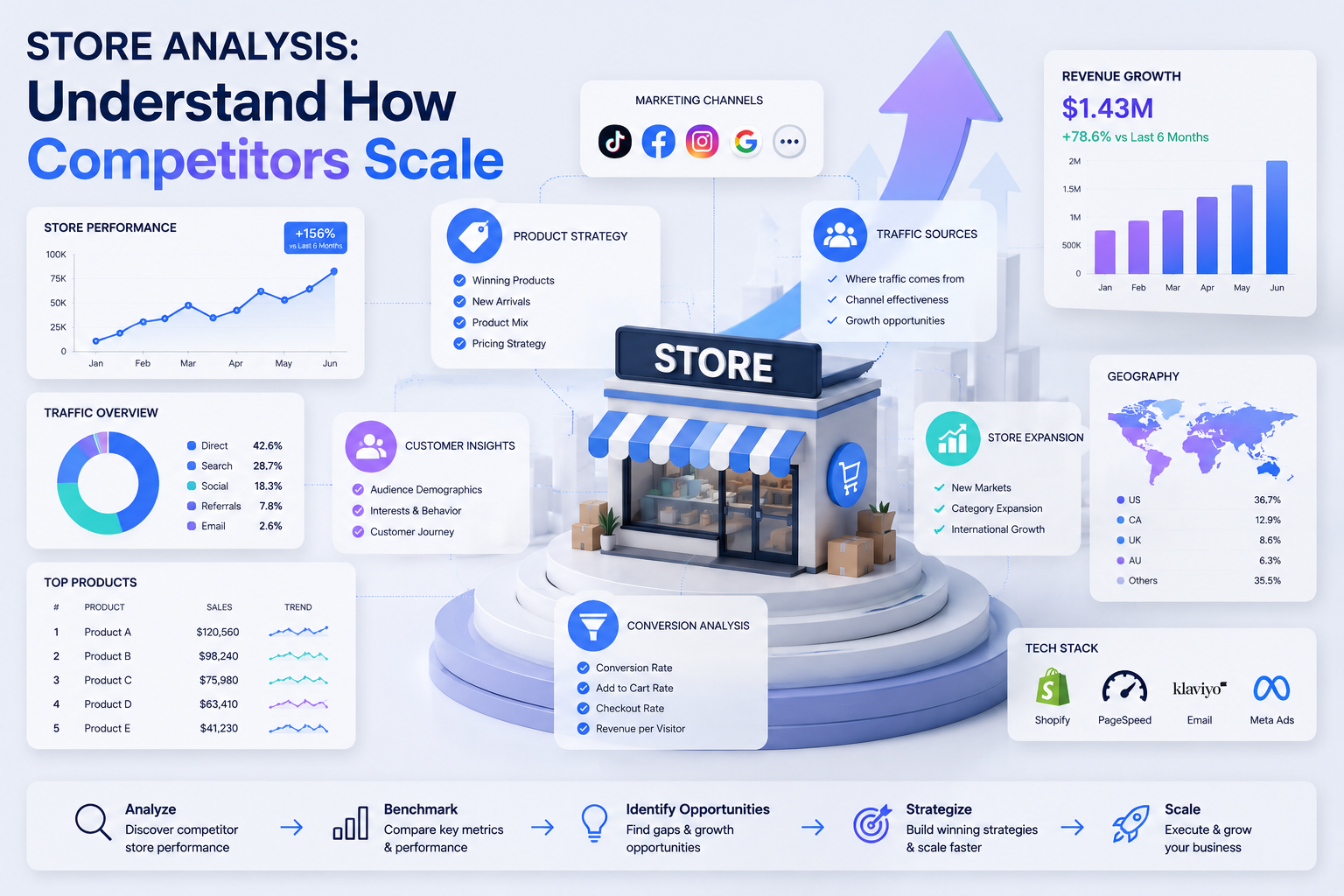
Store analysis helps you understand the business behind the trend.
Is the competitor built around one hero product?
If yes, the store may be vulnerable when the product cools down. But it may also reveal a strong single-product strategy worth studying.
Does the competitor have a category system?
A store with related products, bundles, and repeatable content may have stronger long-term potential.
How does the store use creators?
If multiple creators promote the same store, the competitor may have an effective affiliate system.
How often does the store refresh content?
A store that regularly tests new videos and live streams may be learning faster than competitors that rely on older content.
Creator Analysis: See Who Is Driving Demand
Many TikTok Shop sellers make the mistake of evaluating creators only by follower count. That is not enough.
A better creator analysis looks at:
Audience fit
Content style
Comment quality
Product match
Repeat performance
Category relevance
Buyer intent signals
For example, a creator with a smaller but highly relevant audience may be more useful than a large general creator with weak product fit.
With a TikTok Shop analytics tool, you can review the creators connected to competitor products and stores. Look for creators who repeatedly drive engagement in your category, not just one-time viral creators.
Video and Live Analysis: Decode What Converts Attention
TikTok videos create demand. TikTok live streams often help convert that demand.
When analyzing videos, focus on the structure:
What hook appears in the beginning?
How quickly is the product shown?
Is the benefit visible?
Does the creator handle objections?
Is there social proof?
Is the CTA clear?
When analyzing live streams, look for:
Which products are featured
How the host explains the product
Whether the product needs demonstration
Whether urgency or bundles are used
Whether the store repeats live sessions around the same product
This gives you a clearer picture of how competitors move users from attention to purchase.
Pricing and Promotion Signals
Pricing research should not stop at the number shown on the product page.
In TikTok Shop competitor analysis, pricing includes:
Product bundle design
Limited-time offers
Creator-led promotions
Live-exclusive offers
Perceived value
Shipping and delivery expectations
Comparison with similar products
If a competitor can sell at a higher price, study why. It may be stronger content, better creator trust, better product demonstration, or a more convincing offer.
If a competitor relies heavily on discounts, study whether that strategy is sustainable or only useful for short-term volume.
How to Turn Competitor Insights Into Action
After collecting competitor insights, organize them into decisions.
Insight Type | Business Decision |
|---|---|
Trending product appears across stores | Add to product validation list |
Creator repeatedly promotes similar products | Add to creator outreach list |
Competitor video hook performs well | Build a new creative test |
Live stream supports product education | Consider live demo content |
Store uses bundles effectively | Test bundle positioning |
Category demand is rising | Expand keyword and product research |
Comments show repeated objections | Improve product page and video scripts |
The goal is not to copy the competitor. The goal is to understand the market faster and make better decisions.
Common Mistakes to Avoid
Copying Without Context
A product may work for a competitor because of its creator network, audience, pricing, or live selling strategy. Copying the product without understanding the system behind it can lead to weak results.
Tracking Only Viral Products
Viral products are visible, but they may already be crowded. Look for products with repeated momentum across creators and stores.
Ignoring Store Strategy
Competitor success may come from store operations, product bundling, content rhythm, or creator management, not just one product.
Using Outdated Data
TikTok trends move quickly. This is why monthly and weekly competitor checks are important.
Treating Creators as Traffic Only
Creators are not just distribution channels. They shape trust, product perception, and buyer confidence.
FAQ
What is TikTok competitor analysis?
TikTok competitor analysis is the process of studying competing stores, products, creators, videos, live streams, pricing strategies, and content patterns to understand what is working in your market.
How can I analyze TikTok competitors with EchoTik?
You can use EchoTik to track competitor stores, review trending products, analyze creators, study video performance, monitor live commerce activity, and compare category trends.
What should I look for when analyzing TikTok Shop competitors?
Focus on product momentum, store growth, creator networks, video structure, live selling activity, pricing signals, and customer intent in comments.
How often should I analyze TikTok competitors?
A weekly review is useful for active sellers and agencies. A monthly report is better for strategy planning, category research, and product roadmap decisions.
Is competitor analysis only useful for sellers?
No. Brands, agencies, creators, and affiliate teams can also use competitor analysis to improve content strategy, creator selection, campaign planning, and product positioning.
Why use EchoTik for TikTok competitor research?
EchoTik connects product, store, creator, video, live, and category data in one platform, making it easier to turn competitor signals into practical TikTok Shop growth decisions.
Final Thoughts
TikTok competitor analysis in 2026 is not about watching competitors from the outside. It is about understanding how the market is moving.
The best sellers do not only ask what is trending. They ask better questions:
Which products are gaining repeated momentum?
Which stores are scaling through creators?
Which videos create real buyer intent?
Which live formats help explain and convert products?
Which competitor strategies can be turned into your own tests?
EchoTik helps TikTok Shop sellers, brands, and agencies answer these questions with clearer product, store, creator, video, and live commerce data.
If you want to build a more practical competitor research workflow, start with EchoTik’s guide here:
How to Analyze TikTok Competitors
Then use EchoTik to build your competitor watchlist, monitor monthly category movement, study creator strategies, and turn TikTok Shop competitor insights into your next growth opportunity.