How to Find Winning Products Before Saturation on TikTok Shop

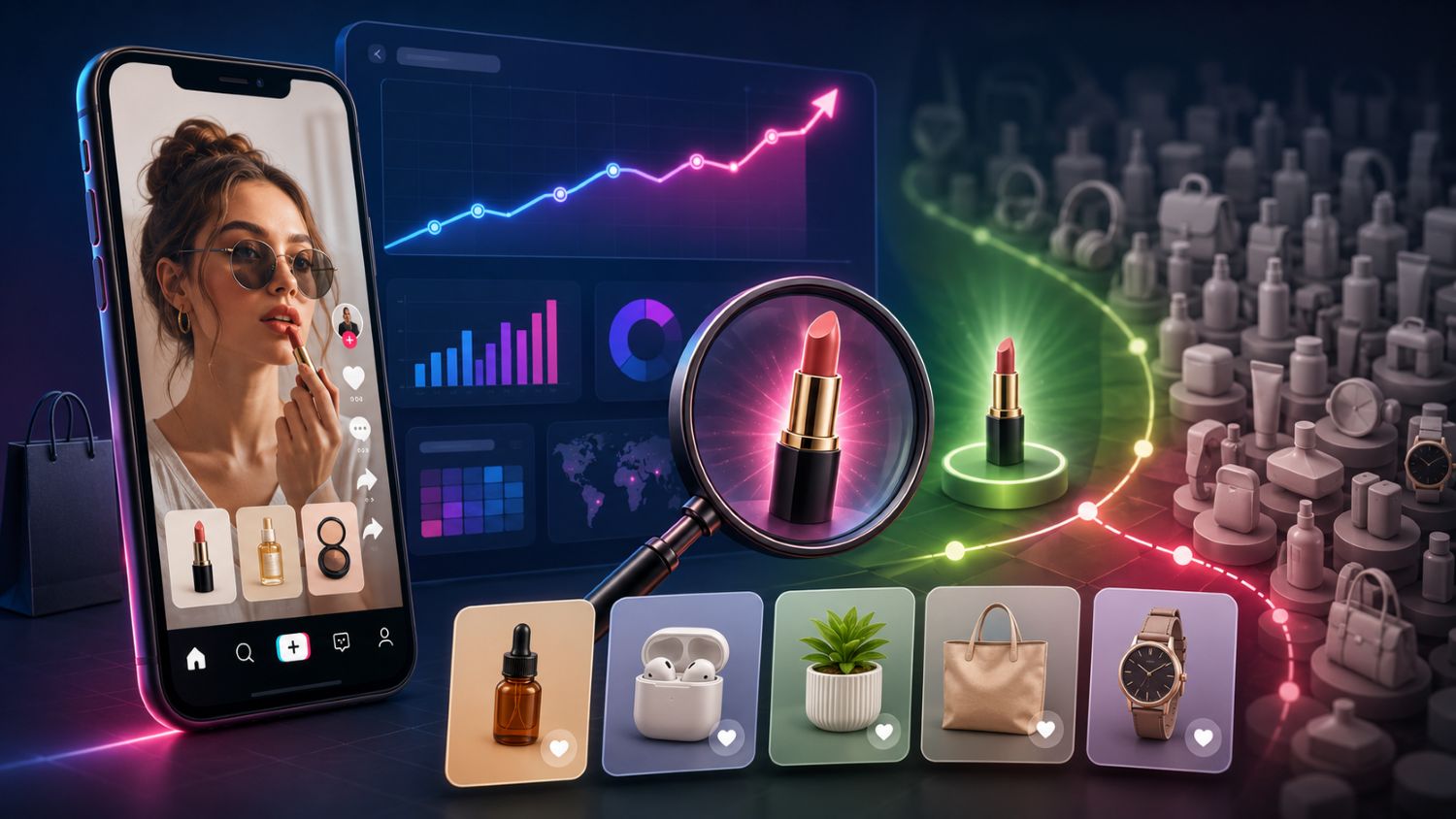
Most sellers do not fail because they picked a bad product.
They fail because they picked it too late.
By the time a product is everywhere on TikTok Shop, margins are already thinner, creators are harder to book, competitors are copying the same scripts, and buyers have seen the offer too many times.
The real skill is not finding viral products.
The real skill is finding products before saturation.
That is exactly where EchoTik becomes useful. It helps sellers read product, creator, shop, video and live-commerce signals before the market becomes obvious.
The Better Question: Is This Product Early, Growing, or Already Saturated?
A winning product usually passes through three stages.
Stage | What It Looks Like | Seller Action |
|---|---|---|
Early signal | A few videos, rising comments, limited shops | Research and shortlist |
Growth window | More creators, more videos, rising shop activity | Test quickly |
Saturation | Many sellers, repeated scripts, price pressure | Avoid or differentiate hard |
Most sellers enter in the third stage.
They see the product everywhere and think it is safe.
But “safe” usually means late.
You want the second stage: enough proof, not too much competition.
What Pre-Saturation Looks Like
A product is worth testing when several signals appear together.
Not one viral video.
Not one top shop.
Not one creator.
You want a cluster of signals.
Look for:
Product ranking is rising
More creators are testing it
Comments show buyer questions
Competitor shops are adding it
Related videos are growing
Live rooms are beginning to feature it
The content angle is not yet overused
EchoTik’s TikTok E-commerce Analysis is built for this kind of research. It includes 13 leaderboards, 14 product selection dimensions, 17 influencer filtering dimensions and 12 live-streaming dimensions.
That gives you a wider view than scrolling TikTok manually.
Step 1: Start With a Market and Category
Do not start with “I need a viral product.”
Start with a market.
For example:
U.S. beauty
UK home appliances
Indonesia baby care
Thailand skincare
Mexico sports products
A product that works in one country may fail in another.
The buyer language is different.
The creator style is different.
The price sensitivity is different.
Use EchoTik to check category movement first. Then move down to products.
Step 2: Check Product Demand, Not Just Product Rank
A ranking is useful, but it is not enough.
A product can rank because of one temporary campaign.
You need to know whether demand is broad enough.
Check:
Data Point | Why It Matters |
|---|---|
Product GMV trend | Shows whether demand is rising |
Price trend | Shows whether sellers are discounting |
Related videos | Shows content supply |
Related creators | Shows promotion strength |
Related live rooms | Shows live-commerce potential |
Comment intent | Shows buyer questions and objections |
Category trend | Shows whether the product belongs to a bigger movement |
EchoTik’s Data API covers product data, creator data, video data, live stream data, shop data and market trends. It also includes product details, price trends, associated creators, videos and lives.
This is the data layer you need before scaling.
Step 3: Study Creator Density
A product without creators is hard to scale.
But a product with too many creators may already be saturated.
You want a middle zone.
Look for products where:
Several creators are testing the product
Engagement is still rising
Scripts are not fully standardized
Comments still ask basic buying questions
Creator content still feels fresh
If every creator uses the same hook, same demo and same discount angle, the product may already be crowded.
Use EchoTik creator data to compare follower count, engagement trends, video lists and live activity.
The goal is not to find the biggest creator.
The goal is to find creators who can actually move the product.
Step 4: Analyze Competitor Shops
A product may look strong, but the shop structure tells you more.
Check competitor shops that are already selling it.
Ask:
Is the product a hero SKU or one item in a wider catalog?
Are competitors bundling it?
Are they cutting prices?
Are they using creators, live rooms or short videos?
Are the same shops appearing repeatedly?
Is one store dominating the market?
If one shop controls the product, entering may be hard.
If several smaller shops are growing, the window may still be open.
EchoTik shop data helps sellers analyze shop details, sales trends, product lists, related creators, videos and lives.
Step 5: Read the Comments Before You Trust the Numbers
Comments are where buyers tell you the truth.
A high-view video can be entertainment.
A high-comment product video can be demand.
Look for comments like:
“Where can I buy this?”
“Does this work for oily skin?”
“Is it good for small apartments?”
“Does it ship to my country?”
“Can you show the result after one week?”
“Is this safe for kids?”
“What size should I get?”
These comments tell you what the next video should answer.
EchoTik’s API page lists comment lists and comment word analysis under video data. That helps sellers move from guessing to script planning.
Step 6: Check Live-Room Signals
Live data is one of the fastest ways to spot product momentum.
A product that appears in live rooms is different from a product that only appears in videos.
Live rooms show whether sellers can explain the product, handle objections and create real-time buying pressure.
Use EchoTik Live Monitor to track competitor live rooms. EchoTik states that Live Monitor can collect minute-by-minute live data and analyze traffic, products, audience and sales pitch.
Check:
Live Signal | What It Means |
|---|---|
Peak viewers | Attention strength |
Product sequence | How sellers position the product |
Follower growth | Whether live traffic creates trust |
Live GMV signal | Commercial potential |
Sales pitch timing | Which talking points move buyers |
Repeated live appearances | Whether sellers are scaling the product |
If a product appears in multiple live rooms but scripts are still inconsistent, that may be a strong pre-saturation signal.
Common Mistakes Sellers Make
Mistake 1: Copying the Top Product Too Late
Top products are useful signals.
But once every seller sees them, the easy window is gone.
Use top products to study patterns.
Then find adjacent products earlier in the curve.
Mistake 2: Ignoring Creator Fit
A product may look strong because one creator made it work.
If you cannot access similar creators, your result may be weaker.
Mistake 3: Only Watching GMV
GMV tells you what happened.
Comments, creator growth and live-room behavior tell you what may happen next.
Mistake 4: Entering During a Price War
If every competitor is discounting, the product may already be saturated.
Look for demand before margin compression.
Mistake 5: Not Building a Content Angle
A product is not enough.
You need a hook, proof, objection answer and reason to buy now.
Use EchoTik AI Tools to turn product data into scripts, titles and selling angles.
A Practical 7-Day Workflow
Day 1: Pick one market and one category.
Day 2: Use EchoTik to shortlist 20 rising products.
Day 3: Remove products with heavy price pressure.
Day 4: Check creators and related videos.
Day 5: Read comments and collect buyer objections.
Day 6: Monitor competitor live rooms.
Day 7: Choose 3 products to test with creators or short videos.
This is how you avoid random product hunting.
You are building a repeatable product research system.
Final Takeaway
A winning product is not just a product with high GMV.
It is a product with rising demand, manageable competition, active creators, buyer-intent comments and live-commerce potential.
If you wait until everyone talks about it, you are already late.
Use EchoTik E-commerce Analysis to find market signals, EchoTik Data API to scale your research, and EchoTik Live Monitor to track live-room movement.
CTA: Try EchoTik for TikTok product research before your next product becomes crowded.