How to Use TikTok Ad Spy Tools to Find Winning Ads

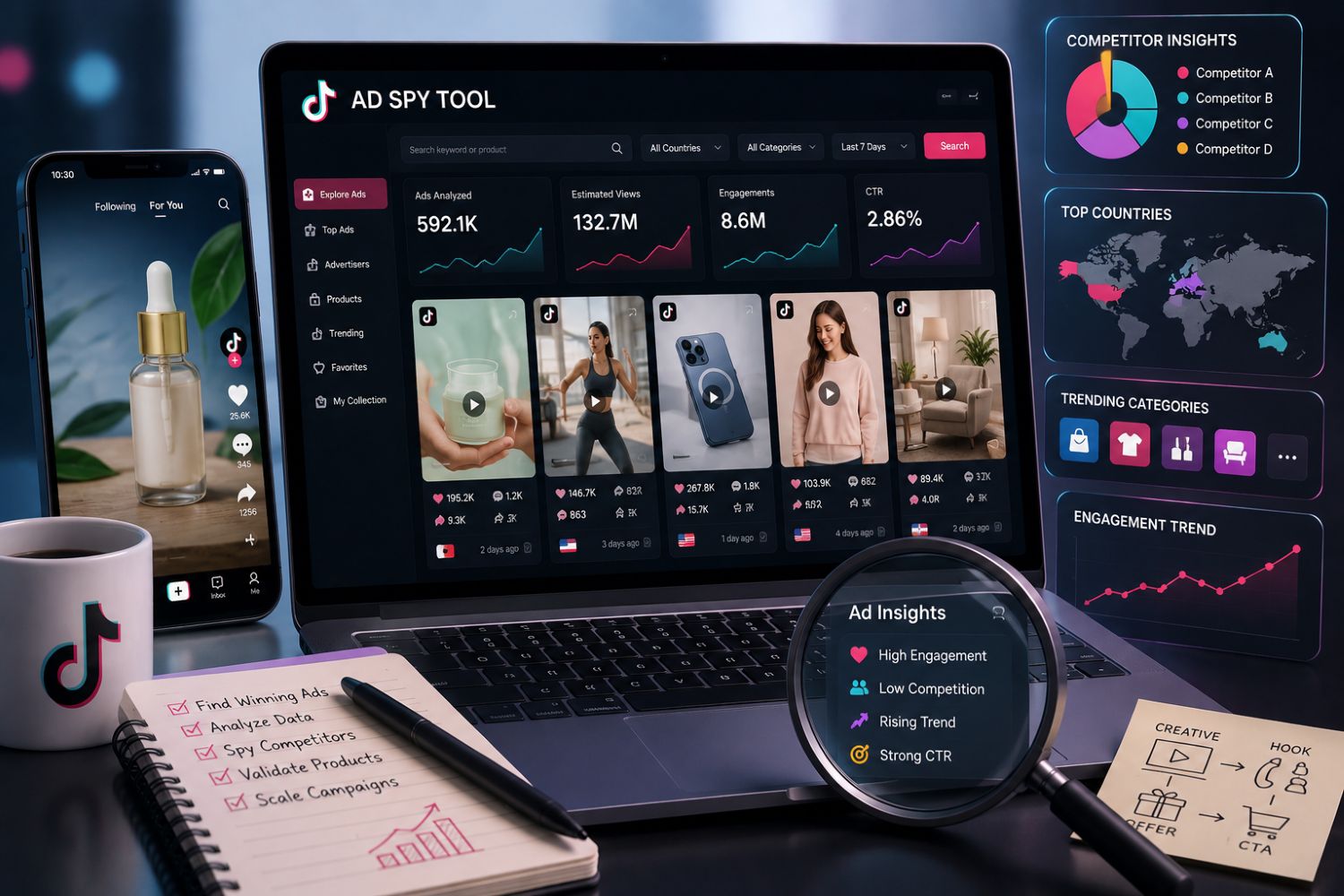
Finding a winning TikTok ad is not about copying the video with the most views.
You need to know what product is being sold, who the ad is for, why people stop scrolling, and whether the interest can turn into sales.
A good TikTok ad spy tool helps you move past guesswork. It gives you a faster way to study ads, products, creators, and competitors before you spend your own budget.
What Is a TikTok Ad Spy Tool?
A TikTok ad spy tool helps marketers and sellers research ads that are already running or gaining traction on TikTok.
You can use it to study creative angles, hooks, products, advertisers, and engagement patterns.
The goal is not to steal ads. The goal is to understand what is working in your market and build a better version for your own audience.
What TikTok Ad Data Can You Analyze?
The most useful ad research starts with a few simple questions.
What product is being promoted?
What happens in the first three seconds?
Is the video creator-led, demo-led, or offer-led?
What problem does the product solve?
Are viewers asking where to buy it?
Is the ad part of a larger campaign?
Look at the full picture. A high-view video may be entertaining but have no clear buying intent.
Key TikTok ad signals to track
Signal | What it tells you |
|---|---|
Hook | Why viewers stop scrolling |
Video format | Whether demos, reviews, UGC, or offers are working |
Comments | Real objections, questions, and buying intent |
Repeated creatives | Whether the advertiser is testing or scaling an angle |
Product demand | Whether attention is connected to a real product opportunity |
Creator fit | Whether the creator makes the product feel believable |
How to Find Winning TikTok Ads
Start with a category, not a random keyword.
If you sell beauty products, search for beauty ads, skincare problems, routines, before-and-after content, and creator reviews. If you sell home products, look for cleaning, organization, repair, or convenience angles.
Then narrow your list.
A winning ad usually has three things:
A clear problem or desire.
A simple visual demonstration.
A reason to click or buy now.
For a broader view of research platforms, compare the best TikTok analytics tools.
Don’t judge an ad by views alone
Views are attention. Sales are proof.
An ad with moderate views but strong comments like “Where can I get this?” or “Does this work for curly hair?” may be more useful than a viral video with no product interest.
Look for ads that make the product easy to understand in seconds.
How to Analyze Products Behind Viral Ads
Once you find a promising ad, research the product behind it.
Check whether multiple creators are promoting it. Look for similar products, price points, shop activity, and whether sales appear to be growing over time.
This helps you avoid chasing a one-video trend.
A product is more interesting when several signals line up:
Multiple videos use different creative angles.
More than one creator is promoting it.
The product solves a clear everyday problem.
Buyers understand the benefit quickly.
Competing shops are still finding room to differentiate.
Use a TikTok Shop data analytics tool to move from ad research into product, shop, and creator research.
How to Analyze Competitor Advertisers
Your competitors can show you where the market is moving.
Make a short list of brands and shops in your category. Review their newest ads, not just their best-performing old videos.
Pay attention to the patterns:
Which products appear most often?
Which hooks keep coming back?
Are they using creators or polished brand ads?
Are they leading with price, proof, or a problem?
Do they change their offers during sales events?
You are looking for gaps. Maybe every competitor uses the same product demo, but no one explains how to choose the right size. That can become your angle.
TikTok Ad Spy vs TikTok Creative Center
TikTok Creative Center is a useful place to explore trends and public creative inspiration.
A TikTok spy tool usually adds more research workflow around ads, advertisers, products, creators, and competitor tracking. The value is in organizing the data so you can compare ideas instead of scrolling endlessly.
Use Creative Center to get inspiration.
Use a research tool when you need to make a product, creative, or campaign decision.
How to Evaluate Engagement and Sales Potential
Strong engagement is helpful, but not every engagement signal means the same thing.
Likes show quick approval. Comments can reveal objections or buying intent. Shares can mean the product is useful, surprising, or giftable.
Here is a practical way to read the signals:
What you see | What it may mean |
|---|---|
“Where did you get this?” comments | Strong purchase curiosity |
Questions about price or shipping | Buyers are moving closer to a decision |
Many saves or shares | The product may be useful or highly giftable |
Repeated creator videos | The brand may be actively scaling the offer |
High views with weak comments | The creative may entertain without converting |
Do not treat one video as a market trend. Compare several ads, creators, and products before you test.
TikTok Ad Research Workflow
Use this workflow once a week.
Step 1: Pick one category.
Do not research everything at once. Focus on one product type or audience.
Step 2: Save 10–20 relevant ads.
Include both large brands and smaller sellers.
Step 3: Tag each ad by angle.
Examples: problem-solution, before-and-after, creator review, product demo, bundle, or limited-time offer.
Step 4: Read the comments.
Write down common questions, complaints, and phrases buyers use.
Step 5: Research the product and advertiser.
Check whether the product has broader demand beyond one video.
Step 6: Build your own test.
Use the insight, not the exact ad. Create a different hook, creator style, offer, or landing-page message.
Practical Takeaways
The best TikTok ads usually make one clear promise and show proof fast.
Do not copy a viral video just because it looks popular. Find the reason it works, then test that idea in a way that fits your product and customer.
A strong TikTok spy tool gives you a better starting point. It helps you see what competitors are testing, what shoppers respond to, and where your next creative idea may come from.
Try EchoTik to research TikTok products, shops, creators, videos, and market trends before you launch your next campaign.
Frequently Asked Questions
What is a TikTok ad spy tool?
It is a research tool that helps marketers analyze TikTok ads, creatives, products, advertisers, and engagement signals.
How do I find winning TikTok ads?
Search within your category, study hooks and product demos, read comments, and compare multiple ads before deciding what to test.
Can I use TikTok ad research for product research?
Yes. Ads can reveal products with growing demand, but you should also check shop, product, and sales signals before committing inventory or ad spend.
What should I look for in competitor ads?
Look at the hook, product benefit, creator style, offer, comments, and whether the competitor keeps testing similar creative angles.