TikTok Shop Analytics Guide

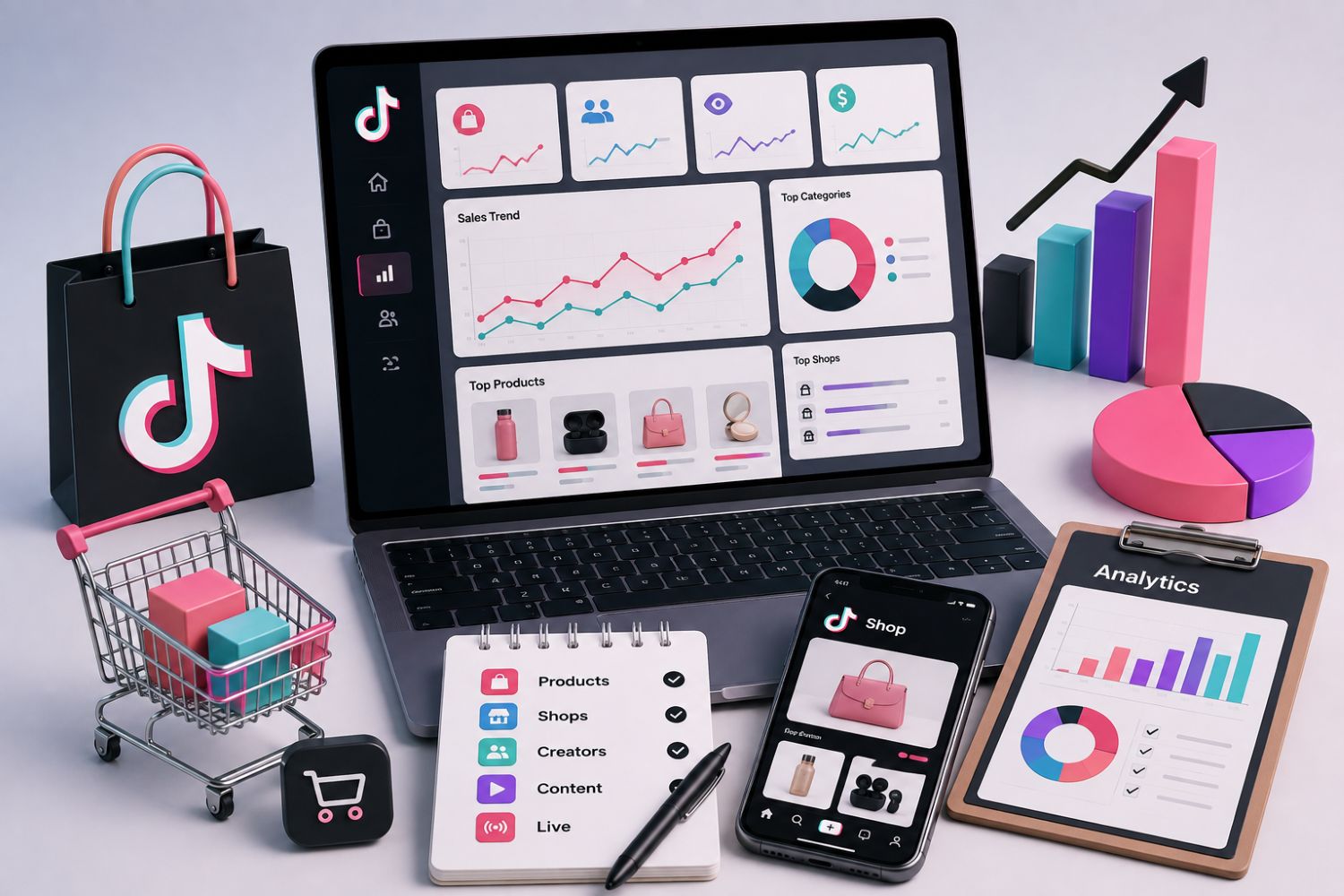
TikTok Shop analytics shows you what’s making money—and what’s only getting attention.
Views matter, but they don’t pay for inventory. You also need to know which products are selling, which creators are converting, which videos drive clicks, and whether a competitor’s growth is real or just a short-term spike.
For a full breakdown of product, shop, creator, video, and sales metrics, see our TikTok Shop data guide.
What Is TikTok Shop Analytics?
TikTok Shop analytics is the data behind your store’s performance.
It covers products, sellers, creators, shoppable videos, live shopping, and sales activity. You use it to figure out what to sell, who to work with, and where your budget is going.
The goal is not to stare at dashboards all day. The goal is to make smarter calls before you buy more inventory or spend more on creators.
Here are the questions worth answering:
What is selling right now?
Is demand growing or slowing down?
Which videos are bringing in buyers?
Which creators can actually drive orders?
Which competitors are worth tracking?
Product Performance Metrics
Start with the product. Not the hype.
A product can get plenty of views and still barely sell. That usually means the content got attention, but the product, price, offer, or audience fit missed the mark.
Metric | What to Look For |
|---|---|
Estimated GMV or sales | How much market activity the product is generating |
Sales trend | Whether demand is climbing, flat, or falling |
Price range | How similar products are priced |
Number of active shops | How crowded the opportunity is |
Content volume | Whether sellers and creators are pushing the product |
Creator activity | Whether the product has enough content support |
Don’t jump into a product just because it ranked well for one week. Look for steady sales, repeat video angles, and demand coming from more than one shop or creator.
Use TikTok Shop product research to compare products, prices, competitors, and content before placing an inventory order.
Shop and Seller Metrics
Shop data shows you how competitors are building their business.
Total GMV is a good starting point, but it is not the whole story. A big store may rely on one viral product, one creator, or one promotion. A smaller shop with steady growth across several products can be a better model to study.
Check:
Estimated shop GMV and sales trend
Best-selling products
Average selling price
New product launches
Creator partnerships
Video and live shopping contribution
Main product categories
Ask yourself: “What does this shop keep doing that seems to work?”
It may be a strong bundle, an easy-to-understand offer, frequent creator content, or regular LIVE sessions. Find the pattern. Don’t copy the store page.
Creator Performance Metrics
Follower count can be misleading.
A smaller creator with the right audience can sell more than a huge account with weak product fit. What matters is whether people trust the recommendation and take action.
When you review a creator, look at:
Estimated sales or GMV contribution
Number of shoppable videos
Views, comments, shares, and product clicks
Products they promote repeatedly
Their content style and audience
Whether results hold up across several posts
One viral post is nice. Consistent sales are better.
Use TikTok analytics tools to compare creators, accounts, content results, and ecommerce performance in one place.
Video Commerce Metrics
A shoppable video should not be judged like a regular entertainment post.
A million views sounds great. But if nobody clicks the product or adds it to their cart, the video did not do its job.
Metric | Why It Matters |
|---|---|
Views | Shows how many people saw the video |
Likes, comments, and shares | Shows whether the content connected with viewers |
Product clicks | Shows purchase interest |
Sales contribution | Shows whether the video converted |
Repeatable format | Shows whether the idea can be used again |
Posting date | Helps you see if results are still current |
When you find a strong video, study the first few seconds. What problem does it call out? How does it show the product? What makes people want to keep watching?
Most winning product videos are simple. They show a problem, show the fix, and make the product easy to understand.
LIVE Commerce Metrics
Live shopping gives you a different view of buyer intent.
A product that struggles in short videos may work well in LIVE. The host can answer questions, show how it works, explain bundles, and create urgency in real time.
Track:
Estimated LIVE sales or GMV
Viewer trends during the stream
Best-selling products in the session
Peak selling moments
Bundles, discounts, and vouchers
Host or creator performance
How often the shop goes live
Don’t judge a LIVE by its highest viewer count alone. A smaller room with shoppers who are ready to buy is often more valuable than a huge room full of casual viewers.
If LIVE is part of your strategy, EchoTik Live Monitor can help you track livestream activity, products, and market movement.
Sales and GMV Trends
One number is a snapshot. A trend tells you what is happening.
Compare data week over week. That helps you spot whether a product is gaining traction, losing momentum, or being pushed by a short promotion.
Watch for:
Week-over-week product growth
Changes in shop GMV
New creators entering the category
Growing content volume
Price changes
New competitor shops
Sales coming from one product versus several products
Third-party TikTok Shop sales figures can be estimates. They are useful for comparing opportunities and spotting trends, but they are not a replacement for your own store’s first-party data.
For more detail, read our guide to TikTok Shop data accuracy and update frequency.
Competitor Research
Competitor research can save you a lot of expensive mistakes.
Other sellers have already tested products, price points, creators, and content angles. You do not need to copy them. You just need to learn what the market is responding to.
Here is a simple workflow:
Pick three to five shops in your category.
List their best-selling products.
Compare prices, bundles, and offers.
Check which creators promote those products.
Save their strongest video angles.
Watch for repeated patterns over a few weeks.
Test one useful insight with your own audience.
The best opportunity is often in the gap: a clearer product demo, better offer, different audience, or less crowded price range.
Weekly TikTok Shop Analytics Workflow
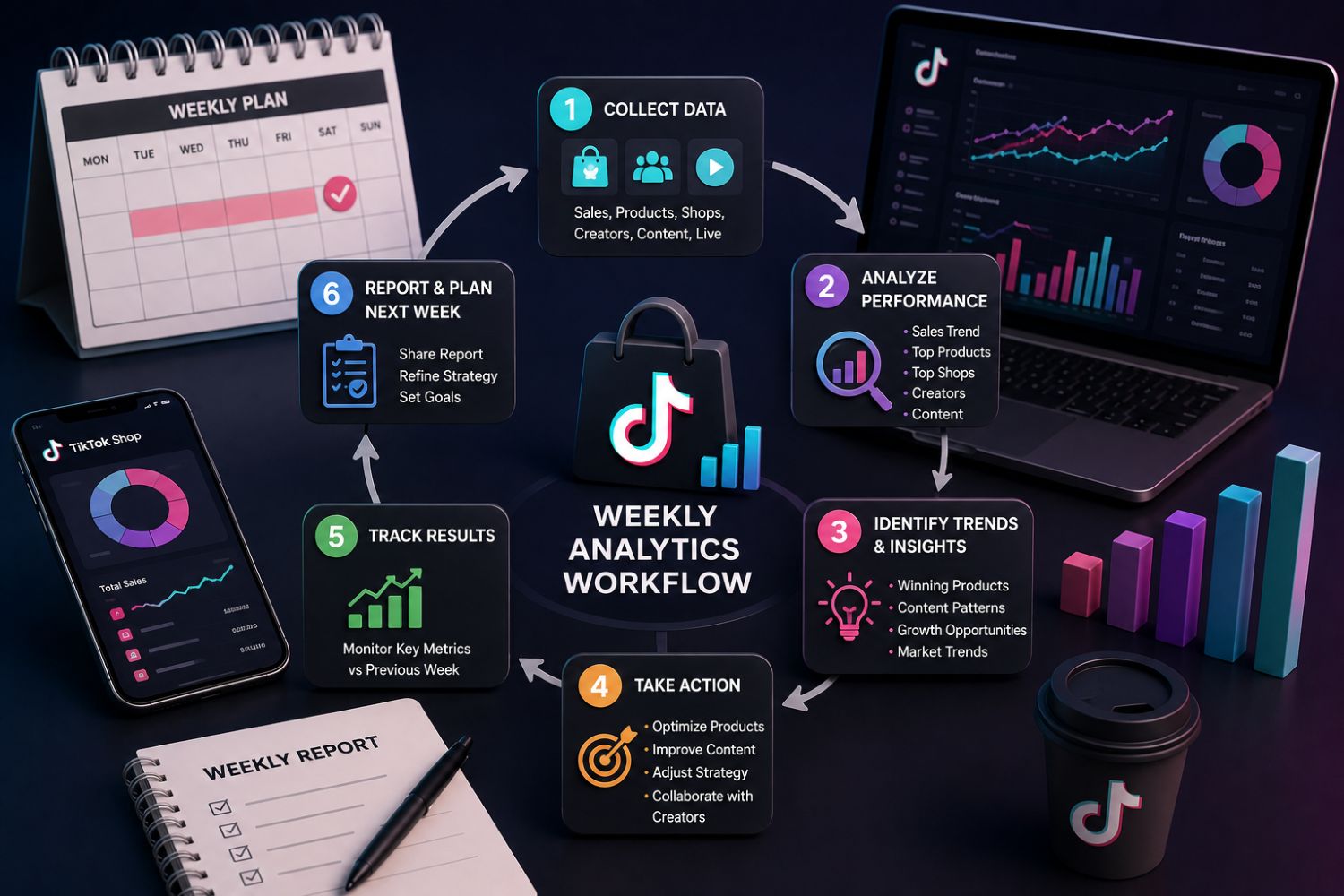
You do not need to review every metric every day.
A simple weekly routine is enough to stay on top of the market without getting buried in data.
Monday: Check sales trends, top products, and inventory risks.
Tuesday: Review competitor shops and new product movement.
Wednesday: Review creator content and shortlist potential partners.
Thursday: Break down your best and weakest shoppable videos.
Friday: Review LIVE results, offers, and common customer questions.
Weekend: Pick one or two things to test next week. That could mean a new creator, product angle, bundle, or LIVE offer.
Good TikTok Shop analytics is not about collecting more data. It is about making better decisions faster.
Final Takeaway
The best TikTok Shop sellers do not rely on views alone.
They watch product demand, shop growth, creator performance, video conversion, live shopping activity, and sales trends together. Then they use those signals to decide what is worth testing next.
Use EchoTik to research products, shops, creators, videos, and LIVE commerce before you put more money into inventory or promotion.