TikTok Shop Best Product Analytics Software

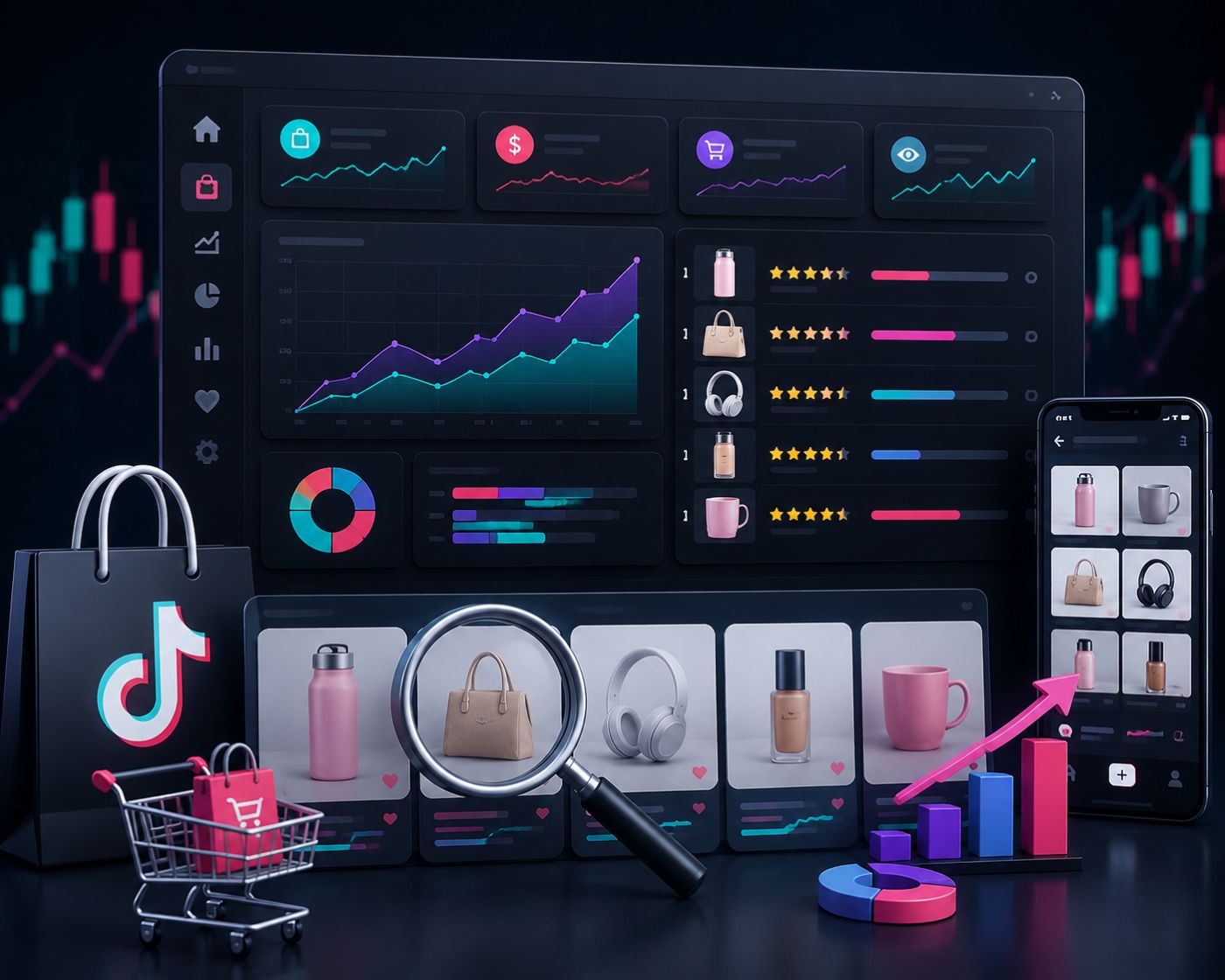
The best TikTok Shop product analytics software should help sellers do more than find “hot products.” It should connect product trends, creator activity, competitor shops, videos, live streams, buyer comments, category movement and policy risk into one decision-making workflow.
EchoTik TikTok E-commerce Analysis is built for this kind of TikTok Shop product research. It helps sellers, brands and agencies understand which products are gaining traction, who is promoting them, which shops are scaling, and whether a product trend is still worth entering this month.
Outline
What Is TikTok Shop Product Analytics Software?
Why Product Analytics Matters in 2026
Key Takeaways
May 2026 Product Analytics Data Checklist
What the Best TikTok Shop Product Analytics Software Should Track
Step-by-Step Workflow: How to Use EchoTik for Product Analytics
How to Validate Product Demand Before Listing
How to Analyze Creators Behind Product Growth
How to Use Competitor Shops and Live Data
Why EchoTik Is Built for TikTok Shop Product Decisions
Common Mistakes to Avoid
Final Thoughts
What Is TikTok Shop Product Analytics Software?
TikTok Shop product analytics software helps sellers understand which products are gaining attention on TikTok Shop and why.
A basic tool may show product rankings or trending items. That is useful, but not enough. Serious sellers need to know the story behind the product:
Which creators are promoting it?
Which shops are selling it?
Which videos are driving attention?
Are viewers asking buying-related questions?
Is the product appearing in live rooms?
Is the trend still active this month?
Is the market already crowded?
Can the product be listed without policy risk?
That is the difference between a product list and real product intelligence.
A product list tells you what is visible.
Product analytics tells you what is worth testing.
Why Product Analytics Matters in 2026
TikTok Shop moves fast. A product can look attractive today and become overcrowded quickly. A seller who only copies viral products is usually late.
In 2026, product research has to connect commerce and content. A product may grow because a creator explained it clearly. A shop may scale because it repeats the same video hook. A live room may prove that buyers need demonstration before purchase. A category may look hot, but the strongest opportunity may be in a safer adjacent product.
This is why sellers need product analytics software, not just manual browsing.
A strong TikTok Shop product analytics workflow should answer:
What is gaining demand this month?
Which products have repeated signals, not just one viral video?
Which creators are driving product interest?
Which shops are entering the category?
Which videos create buyer questions?
Which live rooms show real product education?
Where is there still room to differentiate?
EchoTik’s product research guide is a useful starting point because it positions product research as a full decision workflow, not a single ranking table.
Key Takeaways
The best TikTok Shop product analytics software should connect products, creators, shops, videos, live streams and competitor movement.
Product rankings alone are not enough for serious sellers.
May 2026 product analysis should focus on current demand, creator coverage, shop adoption, live activity and saturation risk.
EchoTik helps sellers validate products before listing, promotion or creator outreach.
A good product analytics workflow should end with actions: product tests, creator lists, content briefs, competitor watchlists and live scripts.
May 2026 Product Analytics Data Checklist
Use this May 2026 checklist for June 2026 product planning. Do not treat it as a static product list. Treat it as a research framework your team can fill using EchoTik.
May 2026 Data Point | What to Check | Why It Matters | Seller Action |
|---|---|---|---|
Product momentum | Products gaining repeated attention across shops, videos and creators | Shows whether demand is still active | Add to product validation list |
Category movement | Active niches such as beauty, home, pet, fashion, kitchen, lifestyle or accessories | Shows where buyers are paying attention | Focus on active categories first |
Creator coverage | Creators posting around similar products | Shows whether the product can spread through content | Build creator shortlist |
Shop adoption | Competitor shops listing or pushing similar items | Shows market demand and competition level | Compare positioning before entering |
Video patterns | Hooks, demos, comparisons, reviews and comment themes | Shows how buyers understand the product | Build content briefs |
Live activity | Products appearing in TikTok live rooms | Shows whether demonstration or trust-building matters | Prepare live scripts and product demos |
Buyer comments | Questions about use, quality, size, result, shipping or comparison | Shows real purchase intent | Turn comments into listing copy and videos |
Saturation risk | Too many shops using the same product angle | Shows whether the opportunity is crowded | Find a better niche, bundle or creator angle |
Compliance risk | Restricted claims, prohibited categories or sensitive product types | Prevents listing and account issues | Check policy before listing |
Repeatability | Whether the product can support multiple video angles | Shows content scalability | Build a 7-day content test plan |
This is the kind of checklist that separates operators from trend chasers. The point is not to find a product that looks hot. The point is to find a product that can survive listing, content, creator and live-selling execution.
What the Best TikTok Shop Product Analytics Software Should Track
Product Momentum
A strong tool should show whether a product is gaining attention across multiple signals, not only one viral post.
Creator Activity
Creators often create the demand. Good product analytics software should help you see who is promoting similar products and whether their audience is responding.
Shop Intelligence
If several shops are pushing the same item, the category may be warming up. If too many shops use the same angle, the product may already be saturated.
Video Performance
Videos reveal how buyers discover and understand products. Look at hooks, demos, comments, reviews and objections.
Live Commerce Signals
Some products need real-time explanation. EchoTik Live Monitor helps sellers study live room activity, product lists, audience behavior and selling points.
Market Context
A product is only attractive if it fits the current market. The best software should help compare category movement, competitor pressure and product differentiation.
API and Data Workflows
For teams that need structured data, EchoTik TikTok Data API supports product, creator, shop, video and live data workflows.
Step-by-Step Workflow: How to Use EchoTik for Product Analytics
Step 1: Choose One Market and Category
Do not start by searching every TikTok Shop product. Choose one market and one category.
Examples:
Beauty tools
Home organization
Pet care
Kitchen accessories
Fashion add-ons
Fitness accessories
Gift products
Creator-led lifestyle products
A narrow category gives cleaner signals.
Step 2: Find Products With Repeated Momentum
Use EchoTik TikTok E-commerce Analysis to review products that appear across rankings, shops, creators, videos and live rooms.
Do not choose a product only because it appeared once in a viral video. Look for repeated attention.
Step 3: Study the Content Behind the Product
A product trend is often a content trend.
Ask:
What hook is being used?
Is the benefit easy to see?
Are creators using demos, reviews or comparisons?
What questions appear in comments?
Does the format look repeatable?
Is the product explained better in short video or live?
This helps you turn product research into content strategy.
Step 4: Analyze Competitor Shops
Use EchoTik to study shops already selling similar products.
Check:
Product mix
Listing style
Creator coverage
Live activity
Video frequency
Product positioning
Repeated selling angles
The goal is not to copy competitors. The goal is to find the gap they are not covering.
Step 5: Review Creator Fit
A product with strong creator fit is easier to scale.
Review:
Category relevance
Product history
Audience comments
Content tone
Live selling ability
Competitor overlap
You can also use the EchoTik Browser Extension to support product and creator research while browsing.
Step 6: Check Live Selling Signals
If the product requires explanation, demonstration or trust, study live rooms.
Use EchoTik Live Monitor to understand:
Which products are featured
What hosts say
When traffic changes
What questions viewers ask
Which objections repeat
How competitors explain the product
Live data often reveals the buyer hesitation that product pages miss.
Step 7: Build a Product Test Plan
Before listing, create a test plan:
Product page angle
Short video hooks
Creator outreach list
Live demo script
Competitor watchlist
Buyer FAQ
Compliance review
Weekly review date
A product without a test plan is just a guess.
How to Validate Product Demand Before Listing
Before adding a product to TikTok Shop, run it through four filters.
Demand Filter
Is the product still active this month across videos, creators, shops and live rooms?
Content Filter
Can the product benefit be shown clearly in short video?
Competition Filter
Are competitors crowded, or is there room for better positioning?
Compliance Filter
Can the product be listed and promoted without policy issues?
If a product fails the compliance filter, do not force it. Read the internal guide on Prohibited Products List on TikTok Shop 2026 before moving forward.
How to Analyze Creators Behind Product Growth
Creators are often the reason a product moves.
A strong product analytics software should help sellers see not only what is selling, but who is shaping demand.
Before contacting creators, ask:
Have they promoted similar products?
Do comments show buyer intent?
Does their audience match your target market?
Can they explain the product clearly?
Are they better for short video, live selling or both?
Do they overlap with competitor products?
A smaller creator with strong category fit can be more useful than a broad creator with weak buyer intent.
How to Use Competitor Shops and Live Data
Competitor shops show what the market is testing. Live rooms show how buyers react in real time.
Track:
Which products competitors push
Which creators they work with
Which videos repeat
Which live rooms explain the product
Which buyer objections appear
Which product bundles or variations are tested
Which categories competitors enter next
If several competitors are selling the same item with weak content, that may be an opening. If everyone uses the same angle and the category is crowded, be careful.
Why EchoTik Is Built for TikTok Shop Product Decisions
EchoTik is useful because it connects product analytics with the real TikTok Shop ecosystem.
Sellers can use EchoTik to research:
Trending products
Product rankings
Competitor shops
Creator activity
Product-linked videos
Live stream signals
Category movement
Market opportunities
This makes EchoTik more than a product finder. It becomes a product decision system.
For teams building reports, dashboards or internal research workflows, EchoTik TikTok Data API can support structured product, creator, shop, video and live data access.
Common Mistakes to Avoid
Choosing Products Only by Ranking
A product ranking is a starting point, not a final decision.
Copying One Viral Video
One viral video does not prove sustainable product demand.
Ignoring Creator Coverage
If creators are not explaining the product well, scaling may be harder.
Ignoring Live Data
Live rooms can reveal product objections and buyer questions that short videos do not show.
Entering Crowded Categories Too Late
If too many shops already use the same product and same angle, the opportunity may be weak.
Skipping Compliance Review
Some trending products are restricted, claim-sensitive or risky.
Not Turning Data Into Action
Analytics should lead to product tests, content briefs, creator lists and live scripts.
Final Thoughts
The best TikTok Shop product analytics software is not the one that gives you the longest product list. It is the one that helps you make better decisions.
A good product decision needs more than a trend.
It needs product momentum, creator support, competitor context, video proof, live data, buyer comments, compliance review and a clear testing plan.
That is why EchoTik is useful for sellers, brands and agencies that want to move beyond guessing.
Start with these EchoTik resources: