TikTok Shop Data API 2026: Real-Time ROI Tracking & Analytics Guide

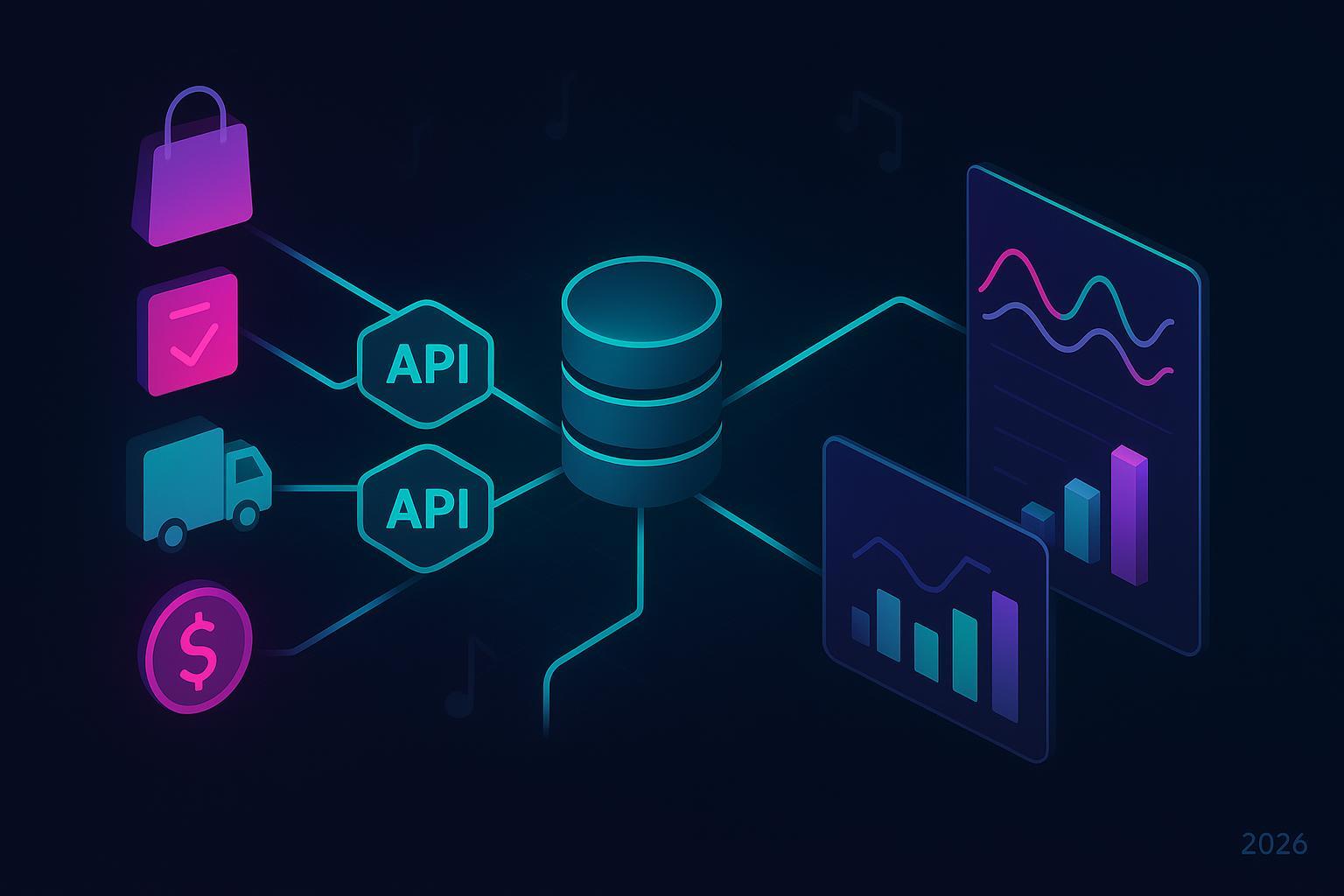
"In the high-stakes TikTok Shop landscape of 2026, raw data is a liability if you can't act on it. The TikTok Shop Data API is no longer just a technical interface—it is the engine behind your Real-Time ROI Tracking. While native dashboards often lag, this guide reveals how to leverage official API endpoints to achieve 100% data accuracy and master the professional analytics required for million-dollar scaling with EchoTik.live."
This 2026 guide explains what’s officially available, how to get access, which endpoint families exist, what metrics you can actually compute, and how to stitch everything into a warehouse-ready pipeline—without guessing at undocumented details. We’ll link to authoritative sources throughout so you can validate every critical step before you ship.
“This technical deep-dive is part of our comprehensive[Master Real-Time ROI: 2026 Shop Data API Analytics ➔], providing a specialized look into the high-ticket data metrics required for professional shop scaling.”
How the TikTok Shop Data API Drives Real-Time ROI
"In the high-stakes TikTok Shop landscape of 2026, raw data is a liability if you can't act on it. The TikTok Shop Data API is the engine behind your Real-Time ROI Tracking."
Two more official anchors you’ll rely on: request signing and V1→V2 migration. TikTok mandates signed Partner API requests, documented in Sign your API request. And the older V1 endpoints were sunset per Deprecating TikTok Shop API V1.
Why this matters: A robust TikTok Shop analytics stack pulls operational facts (orders, products, logistics, finance) from Partner API v2, combines them with paid media and server-side conversion events from API for Business, and reconciles with Seller Center analytics or statements for financial accuracy.
Access and Authorization
TAccess and Authorization
To access Partner API v2, you’ll register your app in Partner Center, request the appropriate scopes, implement OAuth, and sign every request. For sandbox and testing, TikTok provides an official Generate test access token page, and there’s a Postman quick start walkthrough to help you make your first call.
App registration happens in Partner Center. Configure least-privilege scopes and complete seller authorization. OAuth manages access tokens, and the request signing step is mandatory; unsigned or incorrectly signed calls will fail.
Example: minimum Python to sign and call a Partner API v2 endpoint (illustrative pseudocode; adapt exactly to TikTok’s signing sequence):
import time, hmac, hashlib, requests, urllib.parse, os

APP_KEY = os.getenv("TTS_APP_KEY")
APP_SECRET = os.getenv("TTS_APP_SECRET")
ACCESS_TOKEN = os.getenv("TTS_ACCESS_TOKEN")
BASE_URL = "https://open-api.tiktokglobalshop.com"  # Example base; confirm latest in official docs

params = {
    "app_key": APP_KEY,
    "timestamp": int(time.time() * 1000),
    "sign_method": "HmacSHA256",
    # ... include endpoint-specific parameters ...
}

# Build sign string according to TikTok’s official rules
query = "".join([f"{k}{v}" for k, v in sorted(params.items())])
sign_src = APP_SECRET + query + APP_SECRET
signature = hmac.new(APP_SECRET.encode(), sign_src.encode(), hashlib.sha256).hexdigest().upper()

params["sign"] = signature
headers = {"Authorization": f"Bearer {ACCESS_TOKEN}", "Content-Type": "application/json"}

url = f"{BASE_URL}/api/v2/example/endpoint"  # Replace with a documented path after login
resp = requests.get(url, params=params, headers=headers, timeout=30)
resp.raise_for_status()
print(resp.json())
Secure your secrets, rotate tokens, and log canonical request IDs to support reconciliation and audits.
Endpoints Overview and Coverage
Public Partner Center pages confirm the major domains; detailed specs are typically behind login. Treat the following as a map rather than a verbatim spec. The official v1 deprecation notice confirms v2 as the current path.
Domain | Typical data returned | Primary use cases | Doc visibility |
|---|---|---|---|
Products | Product metadata, variants/SKUs, category mappings | Catalog sync, pricing, content checks | Most specs behind login; some category pages public such as Store product categories |
Orders | Order headers, order items, buyer notes, status history | OMS, fulfillment SLA tracking, BI facts | Behind login; referenced in Partner Center updates like JP market updated APIs |
Inventory | Stock levels, reservations, warehouse references | Availability sync, OOS alerts | Behind login; referenced contextually |
Logistics/Fulfillment | Shipment creation, tracking updates, delivery status | Labeling, tracking, customer service | Behind login; referenced in market updates |
Finance/Settlement | Payouts, fees, adjustments, statements | Finance reconciliation, P&L | Behind login; versioning noted in supplementary finance deprecation notice |
Two essentials for endpoint work: follow TikTok’s request signing and confirm V2 migration in Deprecating TikTok Shop API V1. After you log in to Partner Center, consult the definitive v2 endpoint list, scopes, and payload schemas.
Metrics and Analytics You Can Actually Get
There isn’t a single public “TikTok Shop analytics API.” Instead, you’ll compose metrics from three sources.
Seller Center surfaces dashboards and statements. Seller University’s navigation guide highlights GMV, SKU orders, content breakdowns, live performance, and competitive rankings. TikTok’s Ads Help Center contains the Marketing API overview and the Events API overview, plus standard events and parameters for conversions.
A compact metrics dictionary to get your BI modeled quickly:
Modeling tip: Treat orders and order_items as facts; products/SKUs and campaigns as dimensions; conversions and content engagement as events. Partition by event_date and maintain incremental cursors for efficient backfills.
Metric | Formula | Source surface(s) | Notes |
|---|---|---|---|
GMV | Sum(order_item_price × qty) before refunds | Partner API v2 Orders; Seller Center | Reconcile with finance statements for net revenue |
AOV | GMV / Count(orders) | Partner API v2 Orders; Seller Center | Use paid_orders or completed_orders depending on business rules |
Refund rate | Refunded GMV / GMV | Partner API v2 Orders/Refunds; Seller Center | Align time window with payout cycle |
ROAS | Revenue attributed to ads / Ad spend | Events API + Marketing API + Seller Center | Requires attribution model and event deduplication |
For deeper background, consult TikTok’s official Marketing API overview and Events API documentation, and the Seller Center analytics navigation.
Webhooks vs Polling
Official Partner Center materials reference a “full set of webhooks” and include shop-connection and category-related webhook contexts. The complete webhook catalog and payload schemas are generally available after login.
In practice, most teams adopt a hybrid approach. Subscribe to available webhooks for near-real-time changes and ingest to a durable queue. Then run scheduled polling for authoritative “list and detail” reads to reconcile state and heal missed events. Use idempotent upserts keyed by shop_id + entity_id + update_ts.
Until you confirm webhook SLAs and event catalogs in your Partner Center account, assume you’ll need both a push and a pull strategy. Public signals include the Developer Guide hub, Connecting shops, and category-related references such as streamlining of invite-only product categories that mention prerequisites for receiving certain webhooks.
Rate Limits, Errors, and Reliability
Public pages reviewed do not publish numeric rate limits for Partner API v2. Design conservatively with adaptive throttling, exponential backoff with jitter on 429/5xx, and idempotency keys for writes. Schedule nightly reconciliation jobs to list-and-compare orders, inventory, and finance. Emit structured logs with request IDs and latency histograms, and alert on error-rate spikes.
TikTok’s Partner Center Common errors page documents error taxonomy and typical request issues. Keep it nearby while you implement your client.
Retry pseudocode pattern:
def call_with_retry(fn, max_attempts=5):
    backoff = 1.0
    for attempt in range(1, max_attempts + 1):
        try:
            return fn()
        except TransientError as e:
            if attempt == max_attempts:
                raise
            sleep(backoff * random_jitter())
            backoff *= 2  # exponential
Reference Architecture for a Warehouse-Ready Pipeline
Think in stages: ingestion, processing, storage, modeling, and serving. Partner API v2 pulls on schedules plus webhook subscriptions (where available). Events API receives server-side conversions from your website/app/CRM. A queue (e.g., SQS, Pub/Sub) feeds stateless workers that validate schemas, deduplicate, and upsert to raw tables. Use cloud object storage for raw JSON and a warehouse (BigQuery, Snowflake, Redshift) for normalized facts/dimensions. dbt or SQL models produce marts for Orders, Products, Inventory, Finance, and Paid Media/Attribution. Your BI dashboards and alerts will surface GMV, AOV, refund rate, live performance, and ROAS.
Disclosure: EchoTik is our product. As an example of a pragmatic approach, teams often combine native Partner API v2 pulls and Ads/Events data with an aggregator to speed up analytics. For instance, you can use EchoTik to centralize shop, content, and live-stream metrics while your in-house pipeline handles sensitive operational data. Keep it balanced: native Seller Center exports, the Marketing API, and direct Partner API v2 polling remain first-class options. For context on analytics scope, see EchoTik’s public explainer on accessing TikTok Shop analytics and audience insight. If live commerce performance is a priority, EchoTik maintains a Lives Library that can be useful as a supplemental reference while you build your own BI layer.
Regions and Availability
TikTok Shop availability is expanding but varies by market. TikTok’s Ads Help Center page Set up TikTok Shop using Seller Center lists current supported countries and is the safest canonical reference. Confirm eligibility inside Seller Center during onboarding, since markets can change. TikTok’s broader shopping overview in TikTok Shopping and Showcase provides additional availability context.
Regional implications for your stack include data sovereignty (keep PII minimal and hashed where required), market-specific app review timelines and scopes, and multi-region analytics considerations such as region-aware business calendars and tax rules.
FAQs
Is there a single TikTok Shop analytics API? Not publicly. You’ll combine Partner API v2 operational data, Seller Center analytics, and TikTok API for Business reporting plus Events API conversions.
How do I join ads to orders? Use Events API event_ids and timestamps to attribute purchases to campaigns; bring Marketing API reports into your warehouse, then join by time, campaign/ad IDs, and match keys provided in Events context.
Do US shops have the same endpoints as other regions? Endpoint families are the same (Products, Orders, Logistics, Finance), but access, scopes, and availability can vary by market. Always check Partner Center for your account.
Where are rate limits documented? Public pages we reviewed don’t publish numbers for Partner API v2. Implement adaptive throttling and observe 429/5xx behavior; confirm specifics inside Partner Center if documented there. TikTok’s Common errors page is a useful companion while you test.
Closing: Next Steps
Register your app in Partner Center, request scopes, and complete OAuth plus request signing. Stand up ingestion with webhook listeners where available, plus scheduled polling for reconciliation. Send server-side conversions via the Events API and pull ad performance with the Marketing API. Land, model, and reconcile in your warehouse; then build GMV, AOV, refund, and ROAS dashboards.
If you want to accelerate aggregation while keeping native options first, consider using a specialized aggregator to reduce plumbing. You can review the EchoTik API service to see one way teams centralize shop and content analytics alongside official APIs—then decide whether to build or buy for your stack.
Primary keyword focus: This guide uses the term TikTok Shop Data API in headings and throughout to reflect how practitioners search for access, endpoints, and analytics in 2026.