Top Trending Products on TikTok Right Now 2026

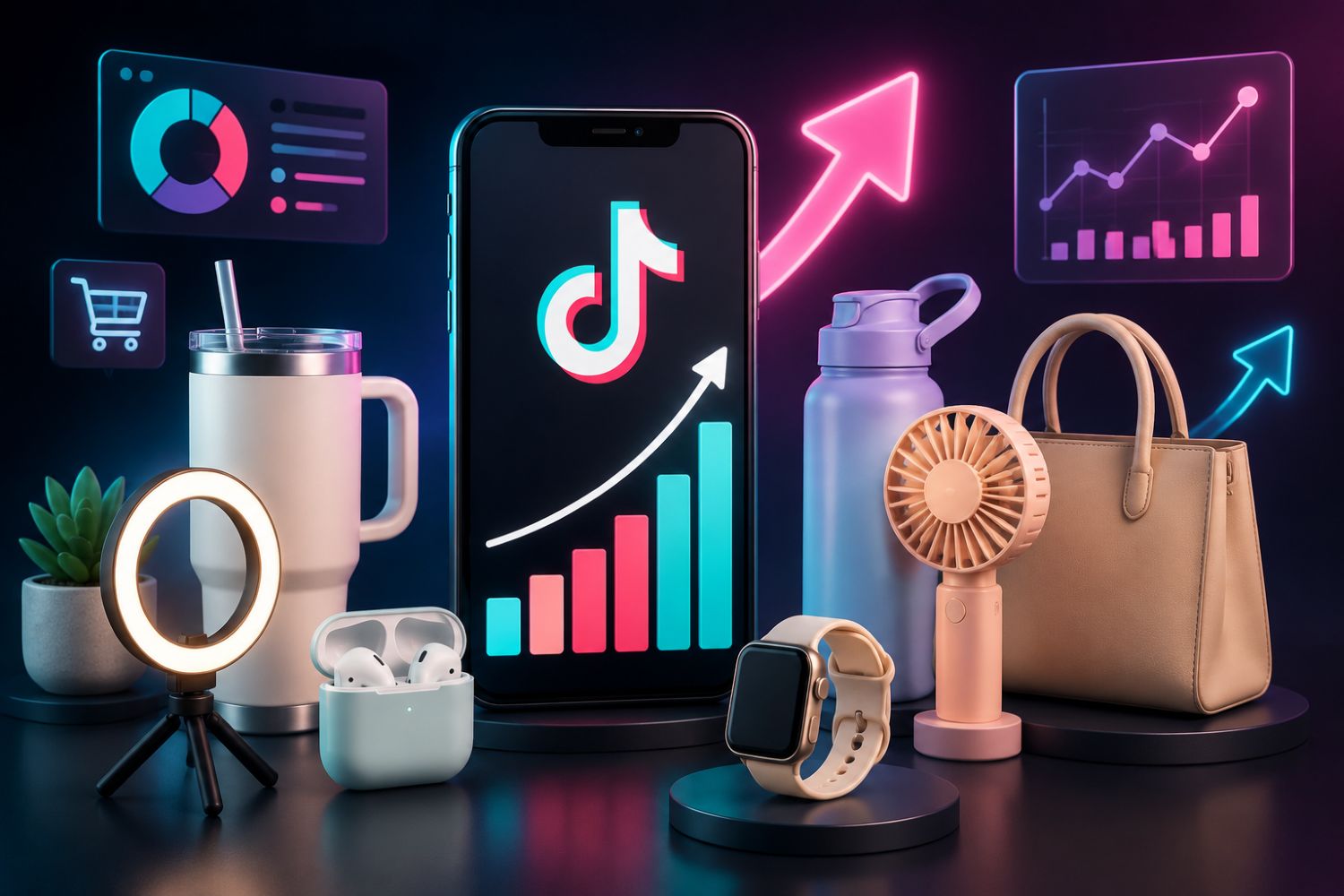
Trending products on TikTok are products gaining attention through short videos, creators, TikTok Shop listings, live streams, comments, shares and repeat promotion across multiple shops.
The safest way to find trending products is not to copy one viral video. A better workflow is to check product momentum, creator coverage, shop adoption, live activity, buyer comments and category movement together.
EchoTik TikTok E-commerce Analysis helps sellers, brands and agencies identify trending TikTok products by connecting product data, creator activity, competitor shops, short videos and live commerce signals in one research workflow.
Outline
What Are Trending Products on TikTok?
Why TikTok Product Trends Matter in 2026
Key Takeaways
May 2026 Trending Product Data Checklist
What Makes a TikTok Product Worth Testing?
Step-by-Step Workflow: How to Find Trending Products with EchoTik
How to Validate a Product Before Listing
How to Study Creators Behind Trending Products
How to Use Competitor Shops and Live Rooms
Common Mistakes to Avoid
Final Thoughts
What Are Trending Products on TikTok?
Trending products on TikTok are products that receive rising attention across TikTok content and commerce signals. They may appear in product review videos, creator recommendations, live rooms, TikTok Shop listings, comment discussions or competitor stores.
But a product is not truly trending just because one video went viral.
A serious seller should look for repeated signals:
Multiple creators mention or promote the product.
Several shops start listing similar items.
Videos around the product receive real comments.
Viewers ask buying-related questions.
Live rooms demonstrate or explain the product.
The product fits a category that is active this month.
Competitors are testing new content angles around it.
This is why EchoTik is useful for product research. It helps sellers move beyond surface-level viral content and study whether a product has enough market support to be tested.
Why TikTok Product Trends Matter in 2026
TikTok is not just a content platform. It is a commerce engine.
A product can rise because a creator explains it clearly.
A shop can grow because it repeats a strong video format.
A live room can convert because the host answers objections well.
A category can become crowded before slow sellers even notice.
In 2026, the best sellers are not the ones who chase every viral item. They are the ones who know how to read product signals early.
The goal is not only to ask:
“What is trending?”
The better questions are:
Why is this product trending?
Who is promoting it?
Which shops are selling it?
Are buyers asking real questions?
Is the trend still active this month?
Is the product easy to explain in video?
Is there room for better positioning?
A product trend is only valuable if you can turn it into a practical product, content, creator or live-selling strategy.
Key Takeaways
Trending products on TikTok should be validated through multiple signals, not one viral video.
Useful product research connects videos, creators, shops, comments, live streams and category movement.
May 2026 product research should focus on current demand, not old viral examples.
EchoTik helps sellers analyze TikTok Shop products, creators, competitor shops and live commerce signals.
The best product opportunities are not always the loudest trends; they are products with repeatable demand and room for differentiation.
Sellers should validate policy, supplier reliability, content fit and creator fit before listing any trending product.
May 2026 Trending Product Data Checklist
Use this May 2026 checklist before choosing products for June campaigns. Do not treat it as a generic trend list. Treat it as a research file your team should fill inside EchoTik TikTok E-commerce Analysis, Live Monitor and competitor tracking.
May 2026 Data Point | What to Check | Why It Matters | Seller Action |
|---|---|---|---|
Product momentum | Products with rising attention across videos, shops and live rooms | Shows whether demand is still active | Add to validation list |
Category movement | Beauty, home, pet, fashion, kitchen, lifestyle, electronics accessories or other active niches | Shows where buyers are paying attention | Focus on active categories, not random products |
Creator coverage | Number and quality of creators posting around similar products | Shows whether the product can spread through content | Build a creator shortlist |
Video patterns | Hooks, demos, reviews, comparisons and comment themes | Shows how buyers understand the product | Build a content brief |
Shop adoption | Competitor shops listing or pushing similar products | Shows market interest and competition level | Compare positioning before entering |
Live activity | Products explained in TikTok live rooms | Shows whether the product needs demonstration | Prepare live script or demo content |
Buyer comments | Questions about use, comparison, results, size, shipping or quality | Shows real purchase intent | Turn comments into product page copy and videos |
Saturation risk | Too many shops using the same angle | Shows whether the market is crowded | Find a better niche, bundle or audience |
Compliance risk | Prohibited, restricted or claim-sensitive product category | Prevents listing issues | Check TikTok Shop policy before listing |
Content fit | Whether product value is visible in short video | Shows whether the item can sell through TikTok-style content | Prioritize easy-to-demonstrate products |
This checklist is more useful than a static “top products” list because TikTok product trends move quickly. A product that looked strong last month may already be crowded this month.
What Makes a TikTok Product Worth Testing?
Not every trending product is worth selling. A product worth testing usually has a stronger combination of demand, clarity and execution potential.
It Solves a Visible Problem
TikTok works well for products that can show value quickly. If the problem and result are easy to see, the product is easier to explain in short videos.
It Has Repeated Creator Activity
One creator can create a spike. Many relevant creators can reveal a real market pattern.
It Creates Buyer Questions
Comments like “Where can I buy this?”, “Does it work for this situation?”, “Can you compare it with another one?” are more valuable than passive likes.
It Fits Live or Demo Content
Some products need explanation. If competitors are using live rooms to demonstrate the product, that may be a signal that live selling can help conversion.
It Has Room for Differentiation
If every seller uses the same video, same claim and same product page, the opportunity becomes weak. A strong product gives you room to improve the angle.
Step-by-Step Workflow: How to Find Trending Products with EchoTik
Step 1: Choose One Market and Category
Do not start with all TikTok products. Choose a specific market and niche.
Examples:
Beauty tools
Home organization
Pet care
Kitchen accessories
Fashion add-ons
Fitness accessories
Creator-led gift products
A narrow category gives cleaner data.
Step 2: Use EchoTik to Find Product Momentum
Open EchoTik TikTok E-commerce Analysis and review product movement in your category.
Look for products that appear across:
Product rankings
Creator content
Competitor shops
Short videos
Live streams
Category trend lists
A product supported by several sources is stronger than one viral clip.
Step 3: Check the Videos Behind the Product
Do not only look at the product. Study the content.
Ask:
What hook does the video use?
How quickly is the product shown?
Is the benefit obvious?
Are comments showing buying intent?
Does the creator sound trustworthy?
Is the format repeatable?
If the product only works because one creator has a special personality, it may be harder to replicate.
Step 4: Study the Shops Selling Similar Products
Use EchoTik to check competitor shops. Look at:
Product mix
Best-performing products
Listing style
Video frequency
Creator coverage
Live activity
Product positioning
The question is not “Can I copy this shop?”
The question is “What is this shop doing repeatedly that the market responds to?”
Step 5: Review Live Commerce Signals
For products that require demonstration, use EchoTik Live Monitor to study live rooms.
Check:
Which products are featured
When traffic changes
What hosts say about the product
What questions viewers ask
Whether product demos increase attention
How competitors handle objections
Live rooms often reveal buyer friction that short videos do not show.
Step 6: Validate Product Risk
Before listing, check:
TikTok Shop prohibited or restricted product rules
Product claims
Supplier reliability
Packaging quality
Shipping complexity
Return risk
Safety or certification needs
If the product is risky, do not force it. Find a safer adjacent product.
Step 7: Build a Test Plan
A product test should include:
Product page angle
Short video hooks
Creator outreach list
Live demo plan
Competitor watchlist
Comment-based FAQ
Review timeline
This turns product research into execution, not just browsing.
How to Validate a Product Before Listing
A trending product should pass four filters before entering your TikTok Shop workflow.
Demand Filter
Is the product still gaining attention this month?
Content Filter
Can the product be shown clearly in a short video?
Competition Filter
Are competitors already crowded, or is there still room for a better angle?
Compliance Filter
Can the product be listed and promoted without policy risk?
For compliance-sensitive categories, read the internal guide on Prohibited Products List on TikTok Shop 2026 before moving forward.
How to Study Creators Behind Trending Products
Creators are often the reason a product becomes visible.
Before contacting creators, evaluate:
Category fit
Product promotion history
Content style
Comment quality
Buyer intent
Live selling ability
Competitor overlap
A creator with a smaller but focused audience can outperform a broad creator with weak product relevance.
Use the EchoTik Browser Extension to analyze TikTok creators and products while browsing, then build a shortlist for outreach.
How to Use Competitor Shops and Live Rooms
Competitor research is one of the fastest ways to understand whether a trending product is real or temporary.
Track:
Which products competitors list
Which products they push hardest
Which creators they use
Which video hooks repeat
Which live rooms explain the product
Which buyer objections appear
Which product bundles or variations they test
If several competitors are pushing the same product but using weak content, you may have an opportunity. If the category is crowded and everyone uses the same angle, be careful.
For structured data teams, EchoTik TikTok Data API can support product, creator, shop, video and live data workflows at scale.
Common Mistakes to Avoid
Copying One Viral Video
A viral video is not a product strategy. Validate with multiple signals.
Ignoring Comments
Comments reveal buyer intent, objections and content ideas.
Choosing Products Only by Views
Views show attention, not necessarily purchase demand.
Entering Crowded Categories Too Late
If too many shops already push the same item with the same angle, margins and attention may weaken.
Skipping Compliance Checks
Some trending products are risky, restricted or claim-sensitive.
Ignoring Live Rooms
Live selling can reveal product questions and buying objections that short videos hide.
Not Building a Test System
A product idea is only useful when it becomes a testable plan.
Final Thoughts
Finding trending products on TikTok is not about chasing whatever looks hot today. That is how sellers end up late, crowded or stuck with weak products.
The better approach is to read the market like an operator.
Which products gained attention last month?
Which products still have momentum this month?
Which creators are driving demand?
Which shops are repeating the trend?
Which live rooms are explaining the product?
Which comments reveal real buyer intent?
Which angle can you own better than competitors?
That is the difference between guessing and product research.
Start with these EchoTik resources: